CBS 2019


CBSMD教育中心




HOME


CBS 2019
At CBS






General Information
Association and Affiliations
Organized by
Nanjing Heart Center
Asian Bifurcation Club (ABC)
Nanjing First Hospital, Nanjing Medical University
Co-organized by
Chinese Society of Cardiology (CSC)
Capacity Building and Continuing Education Center,National Health and Family Planning Commission (CBCEC)
American Society for Cardiovascular Angiography and Interventions (SCAI)
Asian Heart Society (AHS)
Contact Us
Registration Administration of Domestic Representatives
Hongjuan Peng : +86-13913895477
Haimei Xu +86-13914736846
 cbsnj@cbsmd.cn
Registration Administration of Overseas Representatives
Ling Lin : +86 (25) 52271398
+86-13951884596
cbs@cbsmd.cn
Management of Challenging Cases
Yingying Zhao :+86-13815408517
sub@cbsmd.cn
Address
 CBS2019 Congress Secretariat, Nanjing First Hospital, Building No.9 68# Changle Road, Nanjing, China
 210006


FACULTY
FACULTY
General Chairman
Congress Chairman


Education Center
Education Center
• Online Education (For more customized user interface with self-defined collection of research papers and education resources.)
• CBS Education Resource



• CBSMD Scientific Library





SCIENTIFIC LIBRARY
SCIENTIFIC LIBRARY
Research Paper
> Acute Coronary Syndrom
> ASCVD Prevention
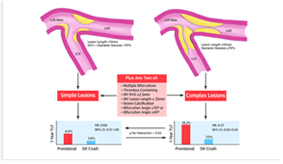
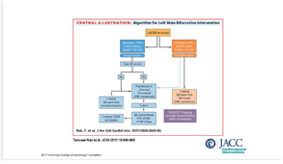
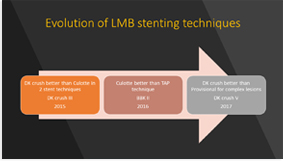
> Bifurcation Stenting
> Cardio-Oncology
> Congestive Heart Failure
> DAPT Duration
> Drug Coated Balloon
> Fractional Flow Reserve
> IVUS Guidance
> Optical Coherence Tomography
> Pulmonary Hypertension
> Rotational Atherectomy
> Shear Stress
> Stenting Left Main
> Transcatheter Aortic Valve Replacement
> Percutaneous LAA Occlusion
> Mitral/Tricuspid Valvular Disease
> Other Relevant Articles
Recommended Paper
Management of Acute Myocardial Infarction During the COVID-19 Pandemic
COVID-19 and Thrombotic or Thromboembolic Disease: Implications for Prevention, Antithrombotic Therapy, and Follow-up
CSC Expert Consensus on Principles of Clinical Management of Patients with Severe Emergent Cardiovascular Diseases during the COVID-19 Epidemic
ACC Clinical Bulletin Focuses on Cardiac Implications of Coronavirus (COVID-19)
Original Research | By Yu X, Ji FS, Xu F et al.
OBJECTIVE - To evaluate the efficacy of paclitaxel-coated balloon for de novo coronary lesions with diameters ≥ 2.8 mm. METHODS - This prospective study included 215 consecutive patients with 238 de novo lesions, who received paclitaxel-coated balloon angioplasty in Beijing Hospital from May 2014 to June 2016. According to the reference vessel diameter, the patients were divided into large ves...
Outcomes with drug-coated balloons in small-vessel coronary artery disease
Review Article | By Megaly M, Rofael M, Saad M et al.
BACKGROUND - Percutaneous coronary intervention (PCI) of small-vessel coronary artery disease (SVD) is associated with increased risk of restenosis. The use of drug-coated balloons (DCBs) in SVD has received limited study. OBJECTIVES - To assess the outcomes of DCB in the treatment of SVD compared with the standard of care. METHODS - We performed a meta-analysis of all stu...
Original Research | By Funatsu A, Kobayashi T, Mizobuchi M et al.
The mechanism of how angiographic results following paclitaxel-coated balloon (PCB) treatment for small vessel disease affect patient outcome remains unknown. In the present study, we aimed to investigate the correlation between coronary dissection immediately after PCB angioplasty and midterm outcome. From March 2014 to March 2017, 171 consecutive patients with 228 native coronary artery lesions who received PCB ang...
Original Research | By Miura K, Tada T, Habara S et al.
BACKGROUND - Little is known of the relationship between optical coherence tomography (OCT) findings and recurrent restenosis after paclitaxel-coated balloon (PCB) angioplasty for drug-eluting stent in-stent restenosis (DES-ISR). To identify the predictors of recurrent restenosis after PCB angioplasty, we investigated quantitative and qualitative OCT findings during PCB angioplasty for DES-ISR. Methods and Results: In al...
Consensus | By Galassi AR, Werner GS, Boukhris M et al.
Since its inception in December 2006, the EuroCTO Club has strived to provide the framework for state-of-the-art chronictotal occlusion (CTO) percutaneous coronary intervention (PCI) in Europe and nearby regions. Among its initiatives, the EuroCTO Club has published a set of recommendations regarding the technical aspects of CTO PCI, whose last edition dates to 2012. The EuroCTO Club consensus document discusses CTO ...
Clinical Trial | By Baystrukov V, Kretov EI, Boukhris M et al.
BACKGROUND - The optimal strategy to treat bifurcation lesions (BFLs) in a percutaneous coronary intervention (PCI) for chronic total occlusions (CTOs) remains unknown. AIMS - We sought to assess whether T-provisional or mini-crush is appropriate for BFLs within CTO vessels. PATIENTS AND METHODS - From January 2011 to December 2013, patients who underwent successful CTO gu...
Original Research | By Baeza Garzón F, Pan Álvarez-Ossorio M, Romero Moreno MÁ et al.
| By A Masri, AM Altibi, S Erqou et al.
OBJECTIVES - This study sought to synthesize the available evidence on the use of the wearable cardioverter-defibrillator (WCD). BACKGROUND - Observational WCD studies for the prevention of sudden cardiac death have provided conflicting data. The VEST (Vest Prevention of Early Sudden Death) trial was the first randomized controlled trial (RCT) showing no reduction in sudden cardiac death as compared to ...
Wearable Cardioverter-Defibrillator after Myocardial Infarction
Clinical Trial | By Olgin JE, Pletcher MJ, VEST Investigators et al.
BACKGROUND - Despite the high rate of sudden death after myocardial infarction among patients with a low ejection fraction, implantable cardioverter-defibrillators are contraindicated until 40 to 90 days after myocardial infarction. Whether a wearable cardioverter-defibrillator would reduce the incidence of sudden death during this high-risk period is unclear. METHODS - We randomly assigned (in a 2:1 ratio) patients w...











 中 文
中 文








 CBS 2019
 CBS 2019 FACULTY
 Education Resource
 CBSMD Scientific Library


